


The landscape of community-related legislation changes every year as new laws are passed. In 2026, several new California HOA laws are worth noting. Knowing what they are is important for boards to ensure their association’s compliance.
What is the Davis-Stirling Act?
In California, the Davis-Stirling Common Interest Development Act is the primary piece of legislation governing HOAs. Its provisions generally apply to common interest developments, including condos and apartment communities.
Through this act, the state has set the rules that HOA boards need to comply with. Many of the new California HOA laws to note this year are amendments to parts of this Act. Every year, more and more amendments are being approved, which is why HOA boards in the state need to review this act and their HOA policies regularly.
New HOA Laws Implemented in 2026
Several HOA laws were implemented at the start of the year. These include the following:
SB 410: Exterior Elevated Element Reports
Signed into law on October 10, 2025, California’s SB 410 took effect at the start of the year. It amended the Davis-Stirling Act, updating what was required for exterior elevated element inspections. Mostly concerning condominiums, these inspections involve certain outdoor elevated common elements in a shared building, such as balconies, decks, railings, and other elevated walkways.
Under this law, community associations are required to conduct a visual inspection of these elements every nine years. It also states that the most recent inspection report must be included in resale disclosures provided to prospective buyers.
SB 410 also requires HOAs to make inspection reports available to members. It also says associations must keep the said documents for two inspection cycles.
SB 625: Disaster Reconstruction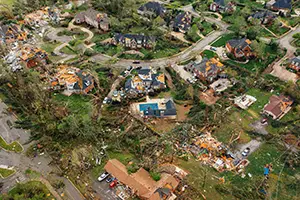
Another piece of HOA legislation that took effect this year is SB 625. This new California HOA law applies to any common-interest development in which a residential structure was damaged by a disaster.
Simply put, this HOA law voids any HOA restrictions that would prohibit a substantially similar reconstruction of a home damaged or destroyed by certain disasters.
However, this also doesn’t provide residents with unlimited rebuilding rights. Instead, it limits the HOA’s ability to use outdated policies to stop qualified rebuild projects.
For a reconstruction to be considered substantially similar, the project must meet certain standards. These include whatever is stipulated in local building codes as well as limits on the new building’s height, size, footprint, and overall design.
Apart from these requirements and limitations, this law also outlines a streamlined architectural review process. It says HOAs must determine if a submission or application is complete in 30 calendar days. The board must also complete the review within 45 calendar days after the application is completed.
SB 770: Electric Vehicle Charging Stations
Another new law that took effect at the turn of the year is SB 770. This amends the state’s association rules connected to EV charging stations.
Prior to this change, residents who installed EV charging stations in common areas or in exclusive-use common areas would need to provide proof of insurance. The coverage should name the HOA as an additional insured. This is now prohibited under the new law.
This doesn’t eliminate homeowner responsibility, however. They still need to have liability coverage and provide the certificate of insurance within 14 days of approval. They must also provide it every year after that and handle installation and energy costs.
With this new law, association board members should review their EV charging policies and application forms. They need to ensure that everything is consistent with the new law.
Pending California HOA Bills to Watch
Aside from the recently enacted legislation, California still has several HOA-related bills pending in the current legislative session. These are the following that may affect HOAs if they’re passed:
- AB 1184: Meetings, Records, and Transparency: This bill aims to change several rules governing HOA meetings and recordkeeping. If passed, this may require HOA boards to be more careful in handling communications through multiple channels as well.
- AB 1684: Cooling Systems: If passed, this bill would limit the association’s ability to prohibit or restrict the use of cooling systems.
- AB 2050: Reserve Funding: One of the more crucial pending bills currently up is AB 2050. This addresses reserve funding and aims to establish stronger funding requirements beginning January 1, 2032. If passed, this legislation would require reserve studies to identify the minimum annual reserve contribution needed to prevent the reserve balance from falling below zero over a 30-year period.
- SB 1007: Assessments and Discipline: This Senate bill could significantly impact many homeowners’ associations, as it would affect a few things in your HOA: First, it would change the limits on HOA assessment increases that don’t require member approval. It would also impact how HOAs handle discipline and annual reports for their communities.
- SB 908: Window Replacement: SB 908 would limit HOA restrictions on certain residential window replacement projects. If adopted, it could reduce an association’s ability to block owners from replacing windows that comply with California energy standards. Boards with strict architectural rules for windows should monitor this bill closely.
How Boards Should Prepare
When your association faces many legislative changes, the board should remain proactive. They must first check the relevant policies and forms to ensure they comply with the new laws. If they still are, not much has to change. On the contrary, if your policies become outdated, you will need to amend them promptly to ensure compliance.
If your HOA works with a community management company, you can have your dedicated manager help create a compliance checklist before the review. This will help in easily keeping track of your HOA’s compliance.
Keeping Up With Legal Changes
The laws in California continue to change as time moves forward. These updates help your communities thrive by balancing the rights of both associations and homeowners. There are already numerous legal updates in effect as of 2026, and more will be introduced in later years. When these changes occur, your HOA board should know how to adapt and maintain compliance without lapses.
Optimum provides expert management services to community associations in Southern California. Call us today at (714) 508-907 or contact us online to learn more!
Related Articles:
- California Balcony Inspection Laws: How Condo Boards Can Stay Compliant
- HOA Turf Watering: How the Board Should Follow AB 1572
- How Does California Title 19 Apply To HOAs?


