


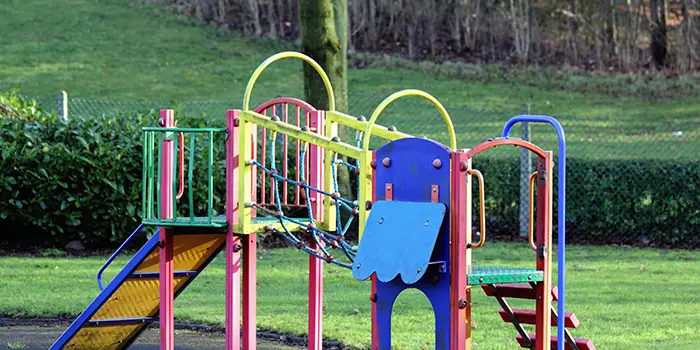
A community playground should give children a safe place to play without exposing residents or the association to avoidable risks. Effective HOA playground safety depends on compliant equipment, regular maintenance, clear rules, and a documented response to hazards.
What Is HOA Playground Safety?
HOA playground safety is the board’s ongoing process for keeping a community play area reasonably safe and appropriate for its intended users. It covers the condition of the equipment and the surrounding space, as well as inspections, repairs, access, and incident procedures.
A playground is not safe simply because it met installation standards when it was built. Normal wear can loosen hardware or reduce surfacing depth. Weather and vandalism can also introduce hazards between formal inspections. Boards therefore need a system that identifies problems early and restricts access when a condition cannot be corrected immediately.
California Playground Safety Requirements
California Health and Safety Code Section 115725 requires new playgrounds open to the public to conform to relevant ASTM standards and U.S. Consumer Product Safety Commission guidelines. The same requirement applies when equipment is replaced or components are modified. The law expressly includes subdivisions among the entities that may operate covered playgrounds and calls for an initial inspection by a certified playground safety inspector.
California playground safety compliance should be reviewed with qualified counsel and a Certified Playground Safety Inspector, particularly before an installation or major renovation. Boards should also confirm whether local requirements or permit conditions apply. Compliance is the baseline, while ongoing maintenance helps preserve safe conditions after the work is complete.
HOA Liability for Playground Injuries
An HOA may face liability when an injury is connected to a dangerous condition in a playground the association controls. California Civil Code Section 4775 generally makes an association responsible for maintaining common areas unless the declaration provides otherwise. California’s general negligence statute also imposes responsibility for injuries caused by a lack of ordinary care in managing property.
The California Supreme Court has recognized that an association controlling common areas can owe residents a duty to exercise due care for their safety. A board that knows about broken equipment or another foreseeable hazard and fails to respond may therefore increase the association’s legal exposure.
However, an injury on HOA property does not automatically prove negligence. The facts may involve the equipment’s condition, supervision, prior notice, and the association’s response. Boards should promptly notify the HOA’s insurance carrier and legal counsel after a serious incident rather than making statements about fault.
HOA Playground Equipment Safety Checklist
A practical HOA playground equipment safety program combines professional evaluations with frequent checks by trained staff or vendors. The following areas should be part of the board’s written process.
Schedule Routine and Professional Inspections
Arrange the legally required initial inspection when applicable and use a qualified inspector after major changes. Between professional reviews, schedule routine checks based on playground use and weather exposure.
The CPSC recommends systematic maintenance inspections by people familiar with the playground. Checks should identify damage, deterioration, displaced surfacing, and sanitation problems that require attention.
Maintain Protective Surfacing
Falls are a central playground hazard, making the surface beneath elevated equipment especially important. The CPSC advises against placing playground equipment directly over concrete, asphalt, dirt, or grass. Protective material should suit the equipment’s fall height and be maintained according to the manufacturer’s instructions.
Loose-fill material can shift under swings and slide exits. Staff should redistribute it when needed and restore the required depth. Unitary surfaces should be checked for cracks or holes.
Repair Equipment and Remove Hazards
Inspect hardware and moving parts for wear. Watch for sharp edges, exposed bolts, broken components, rust, and pinch points. Remove unauthorized ropes or additions that could create entanglement hazards.
When a defect presents an immediate risk, close the affected equipment or the entire play area. Use a secure barrier and visible notice until a qualified professional confirms that the repair is complete.
Provide Age-Appropriate Equipment
The playground should match the ages and abilities of the children expected to use it. The CPSC separates recommendations for toddlers, preschool-age children, and school-age children because equipment suitable for one group may be hazardous for another.
Post age-range signs where residents can easily see them. When different age groups share the site, use clear separation to reduce unintended use of more challenging equipment.
Keep Use Zones Clear
Children need unobstructed space around playground structures so they can move and fall without striking nearby objects. CPSC guidance generally recommends a use zone extending at least six feet around equipment. Greater separation may be necessary when adjacent play surfaces are more than 30 inches high.
Do not allow furniture or landscaping to encroach on these areas. Check for exposed roots, raised borders, and drainage damage that could cause trips.
Address Heat and Weather Conditions
California sun can make slides and synthetic surfacing hot enough to burn skin. Evaluate shade and post heat warnings where appropriate. The CPSC also recommends considering drainage because standing water and erosion can damage surfacing.
After storms or strong winds, inspect the area before reopening it. Close the playground if conditions prevent a reliable safety check.
HOA Playground Security
HOA playground security should discourage unauthorized access while preserving visibility for caregivers. Boards can consider fencing, self-closing gates, and adequate lighting. Any measures should reflect the property’s layout and professional risk recommendations.
Cameras may help document vandalism, but they do not replace inspections or adult supervision. Before installing surveillance, the board should review privacy issues and footage procedures with legal counsel.
Rules should state permitted hours and require caregiver supervision. Emergency contact information should be easy to find, and residents should have a simple way to report damage. Security complaints should be documented and addressed promptly.
Document Maintenance and Incident Response
Written records can show that the association followed a consistent process. Keep inspection reports, repair invoices, closure notices, and resident complaints for the period recommended by counsel and the insurer.
Create an incident form that records when and where an event occurred without assigning blame. Preserve relevant evidence, identify witnesses, and notify the insurance carrier as required by the policy. Serious injuries should also be referred to legal counsel.
Boards should review playground-related insurance limits with an experienced broker. Vendor contracts should clearly assign inspection and repair duties. They should also address licensing and insurance requirements. Clear terms can reduce gaps in accountability, although the board must still oversee the common area.
Safer Play Starts With Consistent Oversight
A strong HOA playground safety program combines compliant design with routine inspections, timely repairs, sensible security, and reliable documentation. Consistent oversight can better protect children while reducing preventable liability for the association.
Optimum provides expert management services to community associations in Southern California. Call us today at (714) 508-907 or contact us online to learn more!
Related Articles:
- A Year-Round Guide to HOA Pool Safety
- 7 Top HOA Maintenance Issues And How To Prevent Them
- HOA Fall Maintenance: What Boards Should Prioritize


