



HOA rental restrictions can help California HOAs maintain their own community character. However, HOA boards also need to know the limitations mandated by state law.
What are HOA Renting Restrictions?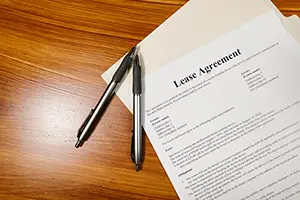
HOA renting restrictions are guidelines that say what homeowners can do when it comes to leasing or renting out their homes. Usually, these rules are enshrined in your HOA’s governing documents.
These rules may vary per homeowners’ association. However, the most common guidelines include the following:
- Requiring a written lease agreement
- Submission of tenant contact information
- Having property owners bear responsibility for violations
- Move-in procedures for tenants
Rules that mostly focus on renter conduct and the documentation are usually easy to enforce in an HOA setting. However, it can become problematic if these rules ban rentals altogether or if they are not consistent with HOA laws in California.
Can HOAs Ban Short-Term Rentals in California?
California law allows HOAs to ban short-term rentals of 30 days or less. Under Civil Code § 4741, associations may adopt and enforce provisions prohibiting transient or short-term rentals.
Airbnb and VRBO Restrictions
Can HOAs restrict Airbnbs? Can HOAs ban VRBO listings? Under the legislation, the HOA may be able to impose restrictions if the booking on any website is 30 days or under.
If your HOA is planning to restrict bookings on those platforms, you need to know the limitations of your rules. As best practice, when establishing guidelines for these platforms, avoid naming only one of them.
Instead of restricting bookings, it would be better for associations to make rules on what renters can and can’t do while staying in the property. The list of allowable activities may vary depending on whether the renter stays for more than or less than 30 days.
Minimum Lease Terms
Given the legislation, California HOAs may create guidelines regarding lease terms. They can outline minimum lease terms as part of the HOA renting restrictions. If they choose to, the association can stipulate that only bookings for 31 days or more are allowed in the HOA.
In some cases, communities would enforce rules that have longer lease terms. However, for the best results, you can consult legal counsel to review whether your rules are consistent with the law.
Can California Ban Long-Term Rentals?
California law treats long-term rentals differently from short-term rentals. Under Civil Code § 4741, HOAs may not prohibit or unreasonably restrict long-term rentals.
More specifically, the association can’t set a rental cap under 25% of the separate interests in the community. A higher cap may be allowed, but a lower cap can conflict with the statute.
This matters for older governing documents. Some CC&Rs still contain rental caps or broad rental bans that were common years ago. Boards should not assume those provisions remain enforceable.
However, even with rental caps, an HOA generally cannot ban long-term rentals altogether. It may regulate leases, require tenant information, and hold owners responsible for tenant conduct, but it cannot use those procedures as a backdoor ban on rentals.
For example, a board may request a copy of the lease. It should not use that requirement to deny a lawful long-term rental without proper authority.
Are There HOA Rules for Grandfathered Properties?
Grandfathering can change the answer. Under Civil Code § 4740, a rental prohibition generally does not apply to an owner unless it was effective before the owner acquired title or the owner agreed to it.
The grandfathering issue became especially important after Brown v. Montage at Mission Hills. In that case, the court treated a new short-term rental ban as a prohibition on rentals. Because the owner bought the property before the ban took effect, the HOA could not enforce the new ban against that owner.
This does not mean every owner is exempt. It means boards must look at timing. The key questions are when the owner bought the property, when the rental restriction became effective, and whether the owner consented to the restriction.
A short-term rental ban may be valid for the community but unenforceable against certain owners who have grandfathered protection. Boards should avoid sending violation letters before checking the dates.
This is especially important in communities that adopted Airbnb or VRBO bans after short-term rentals became a problem.
Are There HOA Rules for Room Rentals?
Room rentals have their own rule under Civil Code § 4739. An HOA generally cannot prohibit an owner from renting or leasing a portion of an owner-occupied separate interest for more than 30 days.
Owner-Occupied Homes
This protection applies when the owner occupies part of the home and rents out another portion for more than 30 days. For example, an owner who lives in the property may rent a bedroom to a long-term roommate.
The association may still enforce rules regarding parking, noise, trash, pets, guest access, and common-area behavior. The tenant does not get to ignore the governing documents.
Short-Term Room Rentals
Civil Code § 4739 does not give owners a right to operate short-term room rentals. If the room rental is for 30 days or less, the HOA may still be able to prohibit it under Civil Code § 4741.
For boards, the difference comes down to duration. A long-term room rental in an owner-occupied home receives more protection than a weekend room rental listed online.
Cities With Strict STR Laws in California
HOA rental restrictions are not the only rules owners must follow. Many cities in California have strict STR laws, and local ordinances can be stricter than the HOA’s documents.
Los Angeles
Los Angeles regulates home-sharing through a registration system. In general, the rental must involve the host’s primary residence, and standard home-sharing is limited unless the host qualifies for extended home-sharing.
San Diego
San Diego requires a short-term residential occupancy license for rentals of less than one month. The city also uses license tiers, with special rules for whole-home rentals and Mission Beach.
Santa Monica
Santa Monica allows licensed home-sharing when the host remains on site. Unhosted vacation rentals in residential housing remain prohibited.
Anaheim and Irvine
Anaheim allows many existing permitted short-term rentals to continue under strict rules, but new STRs remain prohibited. Irvine takes a stricter approach, prohibiting short-term rentals in residential properties.
South Lake Tahoe and Palm Springs
South Lake Tahoe requires permits for vacation home rentals of fewer than 30 consecutive calendar days. Palm Springs allows vacation rentals through a certificate system, but it has neighborhood-based caps and operating rules.
Other Cities
Other places with strict or closely regulated STR rules include San Francisco, Malibu, Beverly Hills, West Hollywood, Pasadena, Long Beach, Santa Barbara, and some coastal communities. Boards in coastal areas should also be aware that California Coastal Commission issues may arise in some locations.
Updating HOA Rental Restrictions
Boards should start with the governing documents. Older CC&Rs may not comply with current California law, especially if they contain broad rental bans or caps below 25%.
Use Clear Language
The policy should define short-term rentals as rentals of 30 days or less. It should also explain whether the rule applies to entire homes, rooms, ADUs, junior ADUs, guest houses, or any portion of the separate interest.
Clear language helps owners understand the rule and helps boards enforce it consistently.
Separate Rentals From Conduct
Rental rules should not carry the entire enforcement burden. Boards should also enforce nuisance, parking, noise, trash, pet, and amenity rules.
This is important because issues can arise with guests, tenants, or owners. A board should address the conduct, not just the rental status.
Check Local Law
Before adopting or enforcing HOA rental restrictions, boards should review local STR laws. A city permit does not automatically override an HOA ban, and an HOA rule does not excuse an owner from city licensing requirements.
The safest approach is to make the HOA rule work alongside local ordinances.
Clear Rules and Better Enforcement
HOA renting restrictions can still be useful in California, but they must be carefully written. A strong policy should define short-term rentals, respect Civil Code § 4741 and § 4739, account for grandfathering, and align with local STR laws in California.
Optimum provides expert management services to community associations in Southern California. Call us today at (714) 508-907 or contact us online to learn more!
Related Articles:
- California HOA Fine Limits: What AB 130 Means For Boards
- New California HOA Laws In 2026: A Guide On Changes And Updates
- HOA Turf Watering: How the Board Should Follow AB 1572


